
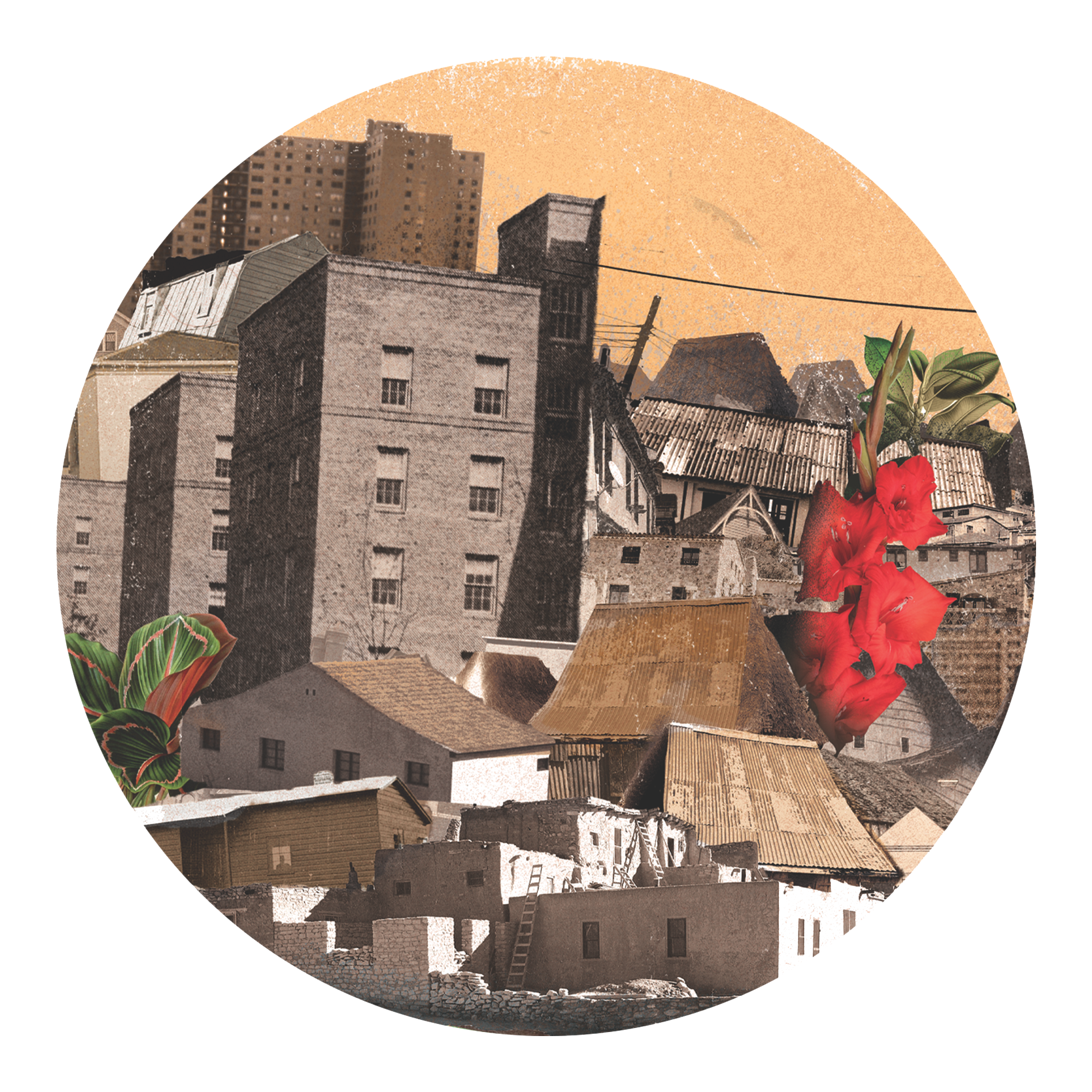
A PAUSE IS NOT A BREAK
A PAUSE IS NOT A BREAK
06 sept. - 30 sept. 2022
BEB gallery at RISD
runtime: 47:30 min
curated by: Jess Myers
-
Sound, like experience, is fleeting, but it leaves traces in the mind and in the body. As such, it is historical, and a viable tool for anticipating and understanding what is to come.” - Camille Norment, Rapture 1/3 (2015)
“You are alive, I whisper to myself, therefore something in you listens.” - Ilya Kaminsky, excerpt from “Alfonso, in Snow,” Deaf Republic (2019)
In architecture, we the practitioners of the built environment, have turned over our mode of communication so entirely to visual mediums, that we have been accused on many occasions of being poor listeners, poor readers, and perhaps, at the base of it, poor perceivers. What does the axonometric, the plan, the section, the elevation, the detail, the model miss? What have we failed to render in our visual pursuits?
The medium of audio may seem like a privation, cutting us off from the images we use to make meaning but in sound there is a representation of liveliness that standard architectural drawings cannot always capture, and in many cases, actively avoid or sanitize. Unlike the eye, which has a natural defense against that which it does not wish to absorb, the ear has no such mechanism. It is difficult to close the ear without great effort. It requires instead a type of concentration that creates hierarchies of the sonic information that surrounds us. And so, sound becomes a ubiquitous medium––perhaps the most ubiquitous sense in space––taking on through its mundane repetitions a significant part of how we, the users of the built, make sense of space. How can we train the architect’s ear onto the issue of occupation, and so history, and so life? Perhaps the tools of repetition and invocation can remind us of what we know, what our minds have been storing all our lives.
Since January 2022, I have been in discussion with Ilze Wolff of Wolff Architects and WAI Architecture Thinktank (Nathalie Frankowski & Cruz Garcia). I worked with sound designer and artist Adriene Lilly on an audio essay that documents my conversations with Wolff, Garcia, and Frankowski as well as my own research into sound as an architectural medium capable of centering the experience of use.
Wolff’s piece, created in deep collaboration with the composer Cara Stacey, is an audio adaption of her film Summer Flowers. Through years of research and trust building with the Bessie Head Foundation, Wolff became the first person to make the sound of the South African writer’s voice more broadly available. Stacey’s composition cuts a fine line between journeying and pursuit, at once wandering and seeking. It guides the listener to Head’s voice, which details the journeying that led her to create her compound in Botswana. Wolff speaks of sound as invocation. She speaks of place not space. Whether Head’s garden or a textile factory or a defunct movie theater in Cape Town, Wolff conjures the sounds of an interview, a clinking tea wheel, or an aria from la Bohème to erect these ghost environments in the minds of listeners; bringing not their forms but rather their meanings to life.
Gracia and Frankowski’s Bolero Tropical (Post-Colonial Sounds), plays with the structure of Maurice Ravel’s famous Boléro to build up an exacting pattern of repetition. A recording of Frantz Fanon’s 1959 speech to the Congress of Black African Writers is the taskmaster of the piece. Loops of his voice herald samples of coquí frogs, Sylvia Wynter’s voice, dembow beats, Aimé Césaire’s voice, drones, and activist Zoán Dávila Roldán’s speech at a Colectiva Feminista en Construcción rally. The sounds of French, Spanish, and English weave together a record of the colonial regimes and radical resistance of the Caribbean. Yet they are also a record of Garcia and Frankowski’s own displacements as well as the theoretical underpinnings of their own collective practice.
I united these pieces on a two disk vinyl set as an archive of my conversations with WAI Architecture Thinktank and Ilze Wolff but also as a way of assembling the ephemeral nature of sound into a physical piece that can be seen and touched. A record has a way of capturing visual attention in order to incite the viewer to become a listener. I hope you will take time to listen.
- Jess Myers
audio essay
A PAUSE IS NOT A BREAK
JESS MYERS
[Track Zero] A Pause is Not a Break
00:15 [Ilze Wolff]
A erasure of knowledge, and then you come in there and you participate in acknowledging that yes, I have the knowledge now to make something. How, how do you have the knowledge to make something? Like, I don’t understand.
00:30 [Nikki Giovanni & James Baldwin Conversation]
…The kids want to live, and we have out of a terrifying suffering, a certain sense of light which everybody needs.
01:00 [Ilze Wolff]
I’m Ilze Wolff, and I am whatever I’m doing at the time.
01:05 [WAI Think Tank]
I am Cruz Garcia. Hi I’m Nathalie Frankowski and we are WAI Architecture Think Tank together here with Ema.
01:15 [Nathalie Frankowski]
Architecture is for others
01:17 [Jess Myers]
A Pause is Not a Break

[Track One] - As I Heard It
01:32 [Jess Myers]
Sound is the animation of space. The mundane and continuous vibrations of HVAC systems, glazing, light fixtures, footsteps, chance eavesdropping, door clicks, car radios, toilet flushes, printer hums, baby giggles, bird song–and so on and so on–add up to an accounting of use, of occupation, of residency. The entire why of architecture. Intuitive as it may be, it remains a ghost in our machines of living. Yet one sound, half of an echo, can unlock visceral memories of spaces we have known and left, of space that was taken from us.
If music is the act of making time aesthetic, as one German philosopher believed, then sound is the record of time. In this account, time and orientation create perception. The root of aesthetics.
Sound brings forward orientation. It makes the ear consider space as a web of relations converging at its location. The ‘what’ you are listening to adds up to the ‘where’.
[Track Two] Sorry, Could You Repeat That?
03:35 [Jess Myers]
When you’ve listened to your own life, all your life, you can become deaf to it. Deaf to the knowledge you have passively accumulated over hours, days, years, and decades of your own routines.
CRUZ 03-15 [6:30]
The Coquis sounds, the Puerto Rican frog
03:57 [Jess Myers]
But a little shift, a bird doesn't return in the spring, a child is born, you move continents, suddenly all that knowledge comes roaring back.
CRUZ 03-15 [9:02]
It’s like breathing, right like I don’t think about breathing except when my nose hurts
04:13 [Jess Myers]
You have cataloged these repetitions all your life. As soon as a sound is added, shifted, or dispersed, of course you can’t help but notice.
CRUZ 05-31 [16:23]
It’s like asking about, what’s the layers of collage? Are they very similar? So there’s many sounds that have different relationships to us. And then again there’s the nineteen partitions or divisions of Bolero, right, and Bolero comes every now and then so it connects also to other works. So in the matter of defining what are the sounds that are fundamental and then everything else is just how to break them. It’s like making poetry out of a with the repetition.
04:53 [Jess Myers]
For Garcia and Frankowski, these repetitions are a propagandist’s dream. The un-strenuous training that teaches the ear not only the sound but to seek the sound. To crave a familiar loop.
WAI (NATHALIE) 4.19 [17:05] - The Fanon Question
Jess: So another thing that I wanted to go back to is this question about the Fanon Speech and the particularity being when it’s happening in Paris.
Nathalie: Really like a very vivid moment at that time in Paris, because again that was like the official moment where all the artists and writers from the French colonies had the stage officially right, the congress. So it was just something very important historically in the past and still present of France. So that’s why it was really interesting for us to use this moment.

[Track Three] My Occupation
06:30 [Jess Myers]
For a year during the Covid-19 lockdowns I lived alone in New York. I kept time by the bells of the church across the street. At noon and at 6 the bells rang a choir of hymns. You can hear it from blocks away. Come Thou Fount of Every Blessing, The Lord of the Dance, Christ is Risen, The Lord’s Prayer, O Come Emanuel. It's always been there. But this was the first time it stepped to the front row of my conscious listening.
As my ear turned in, to my own space, my own routines, I discovered much about where I live. The concert violinist upstairs who drilled Bach’s Sonata No. 2 in A Minor over and over and over again. The re-decorator next door who’s endless banging helped me understand, we have brick walls between us, not studs. Over time I composed the section of my building in my mind. And I recorded it. For months.
In ancient Islamic cities, before standardized time, the call to prayer may have felt similar. It was a way of marking time, of marking devotion, but also of marking space. The mullah at the city center would start the call and then the next would hear and start, and then the next and then again and again until it reached the periphery. By tilting your head then, as I tilt mine now, you could hear it. The map of where you were in relation to others. A plan section in time.

[Track Four] For Those Who Need Understanding
ILZE 02-22 [12:20-15:28] - Space v. Place
I’m talking about place, and I’m talking about places where people were. Places where, we non-humans and humans were and where remnants of people are still there. Because if you say you’re talking about place, then it’s not just about the architecture, because very often these places that I’m talking about the buildings aren't even there anymore. So the architecture is not there, but what is there is still the place. But when you talk about place, you can talk about the spirituality, atmosphere, that the place evokes through kind of just being there and feeling it. So I’m interested in that effect and the remnants and kind of melancholy and despair of the place. How do we begin to repair and how do we find avenues of repair and healing. So that’s what sound–it’s completely underplayed, the impact of sound.
10:17 [Jess Myers]
Sound is a representation of space. A tool missing from Rhino or AutoCAD, yet present in the mundane life of all architectures, betraying their least grand purpose –– use.
Bessie Head’s work to fully live, was an effort often destroyed in her time. Yet, the preservation of such a vision is more than the object of the house, the garden, or even the book; preservation can live in simple recollection. Gathering what was shattered into different wholes.
ILZE 4-25 [15:00] Bessie Head’s House
I write about the fact that it’s a very direct lens of entering this house with the kitchen and then standing with this house built from the proceeds of this novel.
10:58 [Jess Myers]
In sound and story, Wolff goes further than just representation–for her, sound can be invocation.
ILZE 3-27 [31:30-34:00] / [36:00 - 36:45] - Invocation
I mean I was talking about the seaside neighborhood that was erased. I did play sounds of the foghorn, and Cara invoked it with me, with bringing in sounds of the sea and kind of gentle sounds.


[Track Five] We Must Try to Live
12:17 [Jess Myers]
In sound, we can find traces repeated and persisting beyond our control which call for a recognition of choice. In what ways are we aligning ourselves with living? How are we perceptive to those ways of being that are crushed and scattered? The ritualist, the propagandist, the novelist are nimble architects. They enlist time and perception to dissolve the object of space into the network of living. They iterate it with great liberty. The record of lives, experimentally lived and perhaps now dispersed, can still be found in sound. The bulldozer, the rent hike, the eminence of domain matter little. These iterations persist, reminding us of past liveliness and tempting us to construct other ways of being. They turn the study of their architectures into a study of life and the record of it. Whether we listen or not, it continues engulfing us.
playlist: audio

playlist: video

playlist: text
FRAME how a vienna gallery is leading the democratization of design exhibition
Gili Merin (23.july.2022)
E-FLUX ARCHITECTURE black peace on earth
Ilze Wolff and Anonymous (october.2020)
BORCILA listening for
Rozalinda Borcila (2010-2015)
PUMFLET luxarama
Jay Pather, Nomusa Makhubu, Nkule Mabaso and James Macdonald (29.november.2018)
WAI THINK TANK loudreaders: session 5: Ilze Wolff
WAI think tank and Ilze Wolff (02.May.2020)
NORVAL FOUNDATION when rain clouds gather: black south african women artists, 1940 – 2000
(09. february. 2022 – 09. january. 2023)
DEEM what about it: architecture and social responsibility
Cruz Garcia and Nathalie Frankowski
WRETCHED OF THE EARTH speech by Frantz Fanon at the congress of black African writers
Frantz Fanon (1959)
CHILPERIC Achille Mbembe : “ignorance too, is a form of power”
Malka Gouzer and Achille Mbembe
HILDEGARD WESTERKAMP soundwalking
Hildegard Westerkamp (01.january. 2001)
CRITICAL LEGAL THINKING abolitionary listening: propositions & questions
Carson Cole Arthur, Petero Kalulé & AM Kanngieser (22. september.2021)
CHRISTOF MIGONE volume of confinement and infinity
Christof Migone (2003)